
If you own a classic, the first question about shipping it is usually open or enclosed. The honest answer depends on the car, the distance, the season and your budget. Here is how to think about it.
What enclosed transport protects against
An enclosed trailer keeps out weather, road grit and anything kicked up by other traffic. For a concours car with fresh paint going across the country in winter, that protection is worth paying for.
What a dedicated open hauler does well
Most of the risk with car shipping is not the sky. It is handling: how the car is loaded, where it is tied down, how many times it gets moved between trucks and terminals, and whether someone backs another car into it.
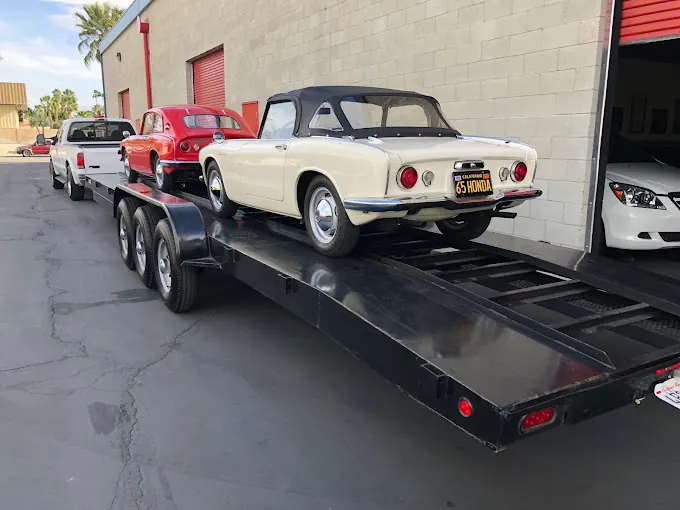
A dedicated open car hauler, like the one Chato's uses, carries one car. It is loaded once and unloaded once. Nothing is stacked above it, and nothing is driven on or off around it. For local and regional moves in Southern California, where the weather is usually dry and the trip is a few hours, that often matters more than walls.
How the car is tied down matters most
Ask any transporter how they secure the car. On a classic, you want straps over the tires so the load goes into the wheels, not hooks or chains on the frame, suspension or bumpers. That is how Jose straps every car, including the 1955 Chevy Nomad in the video on our classic car transport page.
Questions to ask before you book
- Will my car be the only one on the trailer?
- Are there any transfers or terminal stops?
- How do you tie down the car?
- Will you take photos at pickup and delivery?
- Who exactly is driving, and can I call them?
So which one?
For a short or regional move in good weather, a dedicated open hauler with wheel straps is a smart, careful choice. For long winter trips or show cars that can't take a speck of dust, enclosed is worth it. If you are not sure, call Jose at (760) 532-1964 and he will tell you honestly which fits your car.